Connected but Disconnected: Reclaiming Our Attention in a Digital World

We are more connected than ever.
With a few taps on our phones, we can speak to someone on the other side of the world, follow breaking news, share our lives with friends, learn something new, or simply scroll through endless streams of content.
But in a world designed to keep us connected, an important question is emerging:
Are we actually becoming more connected—or are we becoming disconnected from ourselves, from others and from the moments happening around us?
This was the question at the heart of PAYA’s recent session, “Connected but Disconnected: Understanding Social Media Addiction and Reclaiming Our Attention,” held in partnership with the U.S. Embassy at the American Space National Library.
The session brought young people together for an open conversation about something that has become part of everyday life: our relationship with social media.
When scrolling becomes a habit
For many young people, checking social media is one of the first things we do when we wake up and one of the last things we do before going to sleep.
We reach for our phones while waiting for a bus, during breaks, while eating, during conversations and sometimes even when there is nothing in particular we are looking for.
A quick scroll can easily become twenty minutes. A notification can interrupt our concentration. One video becomes another, and another, until we suddenly realise that much more time has passed than we intended.
The problem is not necessarily social media itself.
Social media can help us communicate, build communities, discover opportunities, express ourselves and stay informed. The challenge comes when our use of technology becomes less intentional—when we are no longer choosing when to engage, but instead feel compelled to constantly check, scroll and respond.
The PAYA session encouraged participants to pause and think about that distinction.
Are we giving away our attention?
One of the most valuable things we have is our attention.
Where we place our attention influences what we learn, how we work, how we communicate and how we experience the world around us.
Yet attention can be difficult to protect in an environment filled with notifications, short-form videos, messages and constantly changing content.
The session provided an opportunity for participants to reflect on how social media can affect attention, relationships, productivity and wellbeing. It also encouraged young people to examine their own digital habits and consider whether their technology use reflects what they actually value.
This reflection is particularly important for young people who are growing up in an increasingly digital world.
Technology is not going away—and nor should it.
The goal is not to reject technology, but to learn how to use it without allowing it to control our time, attention or relationships.
From awareness to action
Awareness is only the first step.
The session encouraged participants to think about practical ways they could develop healthier and more intentional digital habits. Rather than simply telling young people to “use social media less,” the conversation focused on becoming more conscious of how, when and why we use technology.
That might mean putting the phone away during conversations.
It might mean creating periods of the day without social media.
It might mean turning off unnecessary notifications, taking regular breaks from screens, or simply asking ourselves before opening an app:
“Why am I here?”
Sometimes, reclaiming our attention begins with something as simple as putting the phone down and being present.
The power of honest conversations
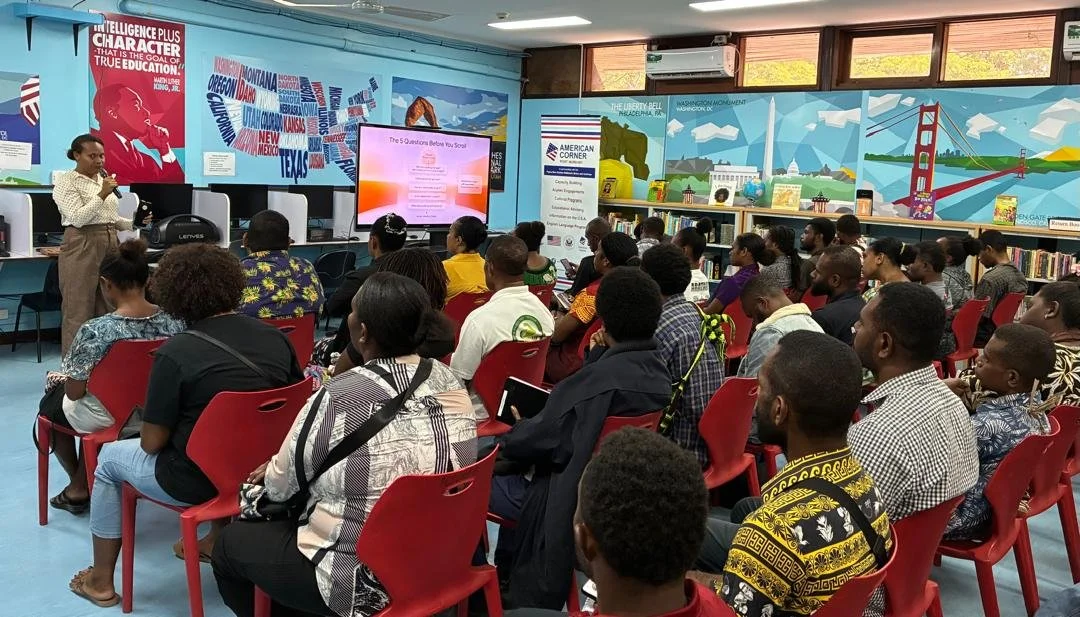
The session also created space for participants to share their experiences, observations and reflections.
These conversations matter.
Young people are often told about the dangers of social media, but meaningful change is more likely when young people are given the opportunity to talk openly about their own experiences and think critically about the choices they make.
The session was therefore not about blaming technology or criticising social media users.
It was about awareness.
It was about recognising that our digital habits can shape our everyday lives—and that we have the ability to change those habits.
Reconnecting with what matters
Being connected should mean more than being online.
It should mean being present with the people around us.
It should mean having meaningful conversations without constantly checking a screen.
It should mean being able to concentrate on our goals, our studies, our careers and the things we care about.
And sometimes, it should simply mean being comfortable enough to put the phone away.
For PAYA, this conversation is part of a broader commitment to supporting young people to become thoughtful, capable and socially responsible leaders. The organisation recognises the importance of nurturing young people who can think critically, connect meaningfully with others and navigate the challenges of an increasingly digital world.
The question is not whether we should be connected.
The question is whether we are connected intentionally.
In a world competing for our attention, perhaps one of the most powerful things we can do is learn how to take it back.
Put down the phone. Look up. Be present. Reconnect.
Because sometimes, the most meaningful connection happens when we disconnect.